
Resonance
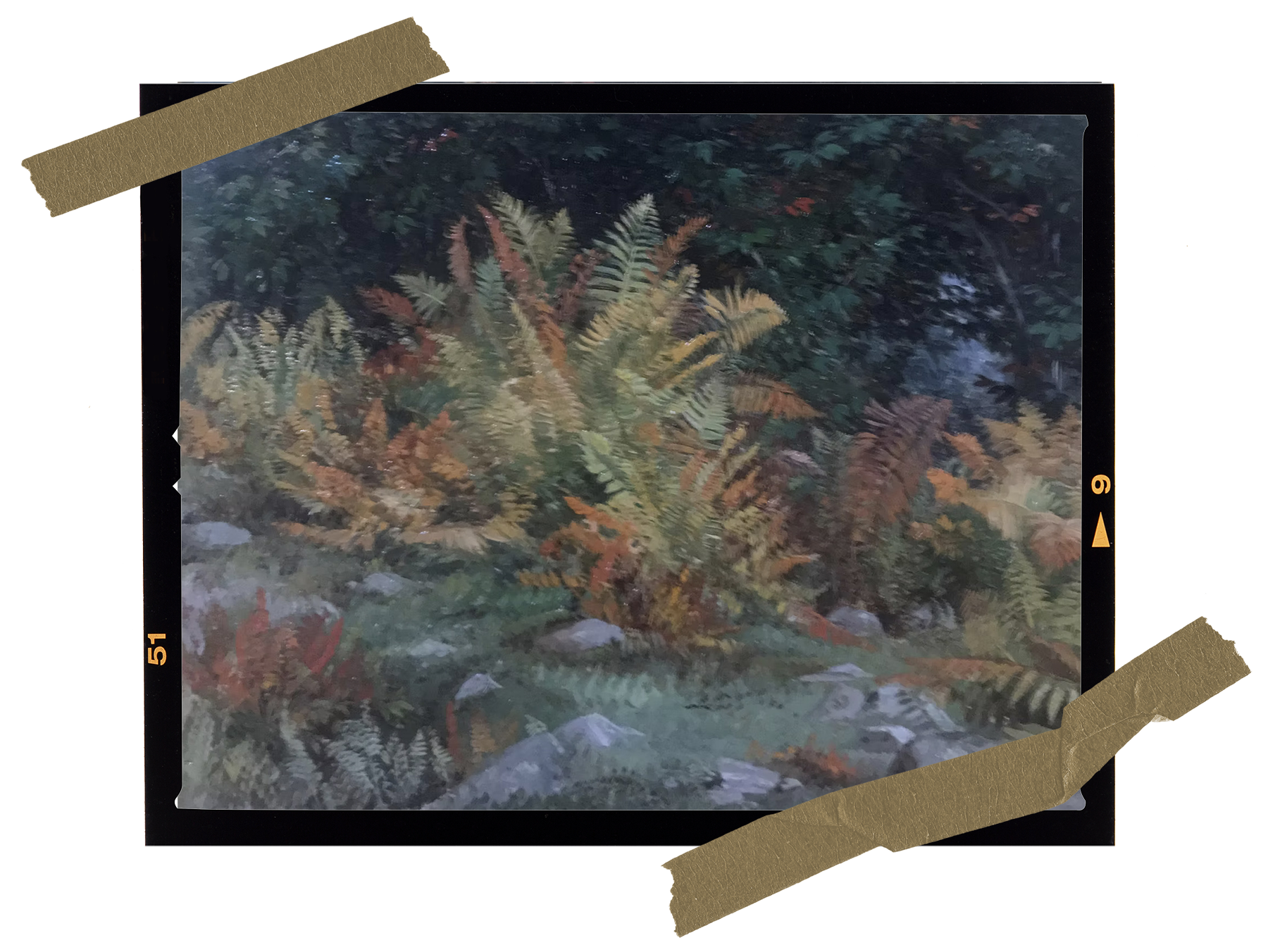
“Fern Study” Aaron Draper Shattuck. 1859.
Image courtesy of the Salmon Brook Historical Society.
I’ve mentioned in past notes my love of connections. It’s my favorite New York Times puzzle and my favorite thing to discover in conversation. It’s also why I love walking through old New England graveyards, which isn’t as macabre as it might sound. My grandfather spent much of his retirement researching our family genealogy, wandering a lot of burial grounds and taking us through a few on his way. He even named his resulting book after me because I enjoyed it all so much. The idea of our familial branches winding through ancestral trees alongside historic moments held endless fodder for my imagination, and gave me such a sense of **ahem**rootedness.
Fast forward to this fall. My dad had learned about an artist from my Connecticut hometown who was actually quite important. But I’d never heard of him in my art history classes, so the name Aaron Draper Shattuck meant little to me, except as the name on the local American Legion post. “You’ve got to see his ferns,” my accountant father insisted after seeing his work at the historical society. “I think you’ll love them.” The grainy picture he included looked interesting, and I pinned it in my mind for a moment when I wasn’t so busy. A few weeks following at our high school’s used book sale I snagged an art book about the much painted Monhegan Island in Maine. The chapter “Arrival of the Artists” began by telling the story of a young man who landed in 1858 not to fish, but to sketch. His name was Aaron Draper Shattuck. And with that, I was ready to go down the rabbit trail.
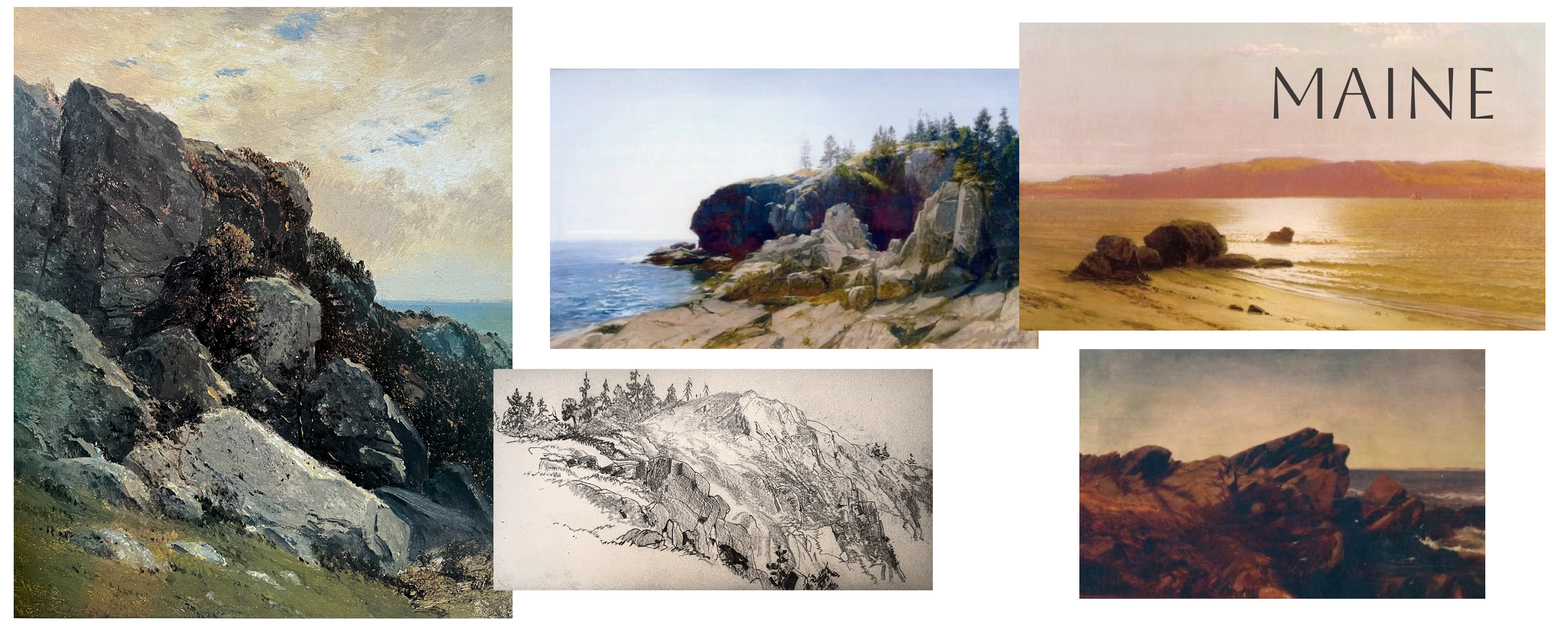
Caption clockwise: “White Head Cliff” Aaron Draper Shattuck. 1858. Monhegan, the Artists’ Island, Down East Books.“White Faced Cliffs” Aaron Draper Shattuck. Image courtesy of the Salmon Brook Historical Society. “Casco Bay” Aaron Draper Shattuck. Image courtesy of the Salmon Brook Historical Society. “Maine Coast” Aaron Draper Shattuck. Image courtesy of the Salmon Brook Historical Society. “White Head Cliff Study” Aaron Draper Shattuck. 1858. Monhegan, the Artists’ Island, Down East Books.
What I discovered was an artist with whom I had resonance across geography, subject matter, color, and brushwork. He began his life in 1832 in New Hampshire, and by 26 had arrived on Monhegan after studying in New York. As part of the White Mountain School, he painted scenes primarily of NH, New York, Maine and Vermont. His work was well received, and he was successful enough to make a living from it. In 1879 he settled in my small hometown of Granby, CT, where he painted it’s bucolic brooks and meadows, as well as farm animals. Ten years later, the effects of severe illness left him nearly blind, and he gave up painting at the age of 56. But remarkably, he became an active farmer, experimenting in animal and plant breeding, and living to 96, surrounded by an extensive family. He is buried in the same cemetery as my grandma.
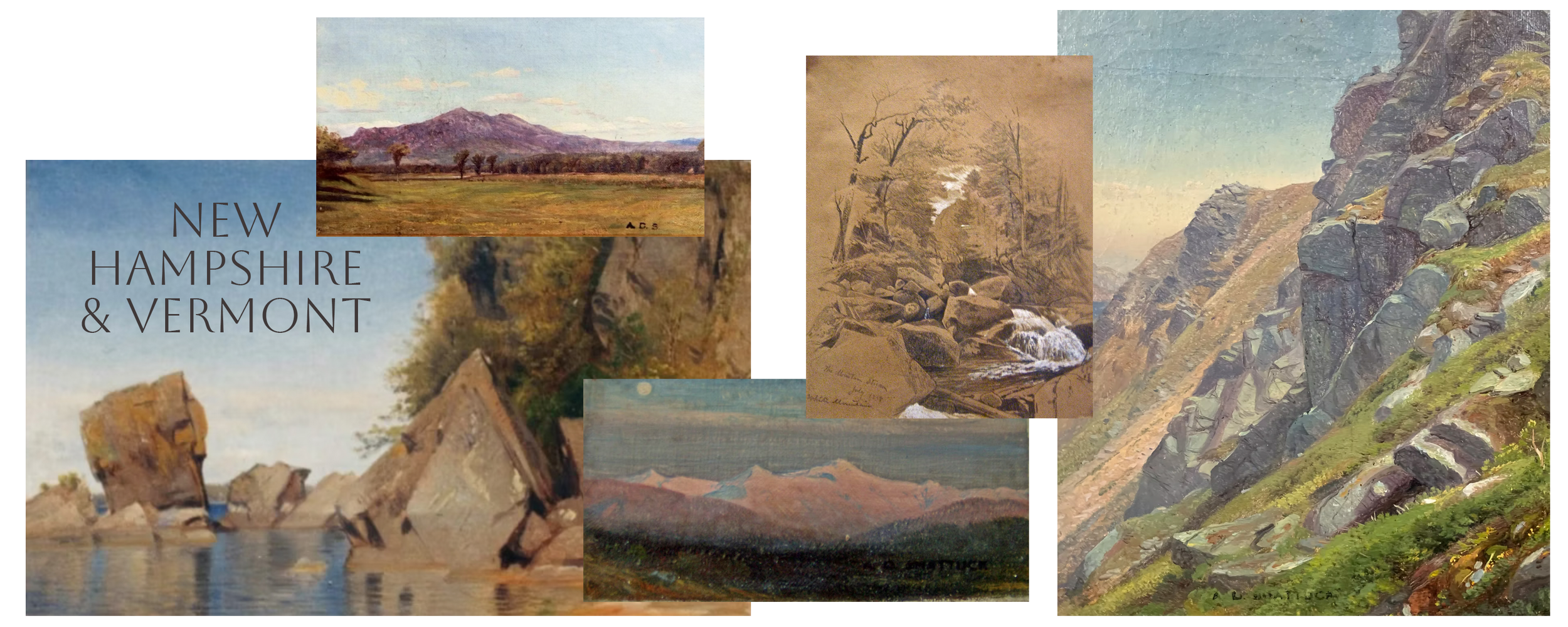
Caption clockwise: “Lake Champlain & Granite Rocks, VT” Aaron Draper Shattuck. “Mt. Monadnock, New Hampshire” Aaron Draper Shattuck. “The Mountain Stream” Aaron Draper Shattuck 1859. New Hampshire Hillside” Aaron Draper Shattuck. “Sunrise Mt. Washington NH” Aaron Draper Shattuck 1860. All images courtesy of the Salmon Brook Historical Society.
My own art journey went a bit in reverse, but has all the same players. I began my life in Granby, CT, surrounded by farms, feeding the neighbor’s aggressive sheep, and eventually becoming a 4-H Grand Showman in goats (not to brag, but I have a trophy with a golden goat). After living in New York and coming back to New England, I saw the area with the fresh eyes of someone who had no idea the treasure surrounding them until they left it. Like Shattuck, I found ample inspiration in Granby: Enders Falls, Salmon Brook, side streams and swamps. And I began to travel the region just to experience the places I wanted to paint (Acadia, the White Mountains, the Maine Coast, various parks, etc.) and dragged my kids on “vacation” with me.
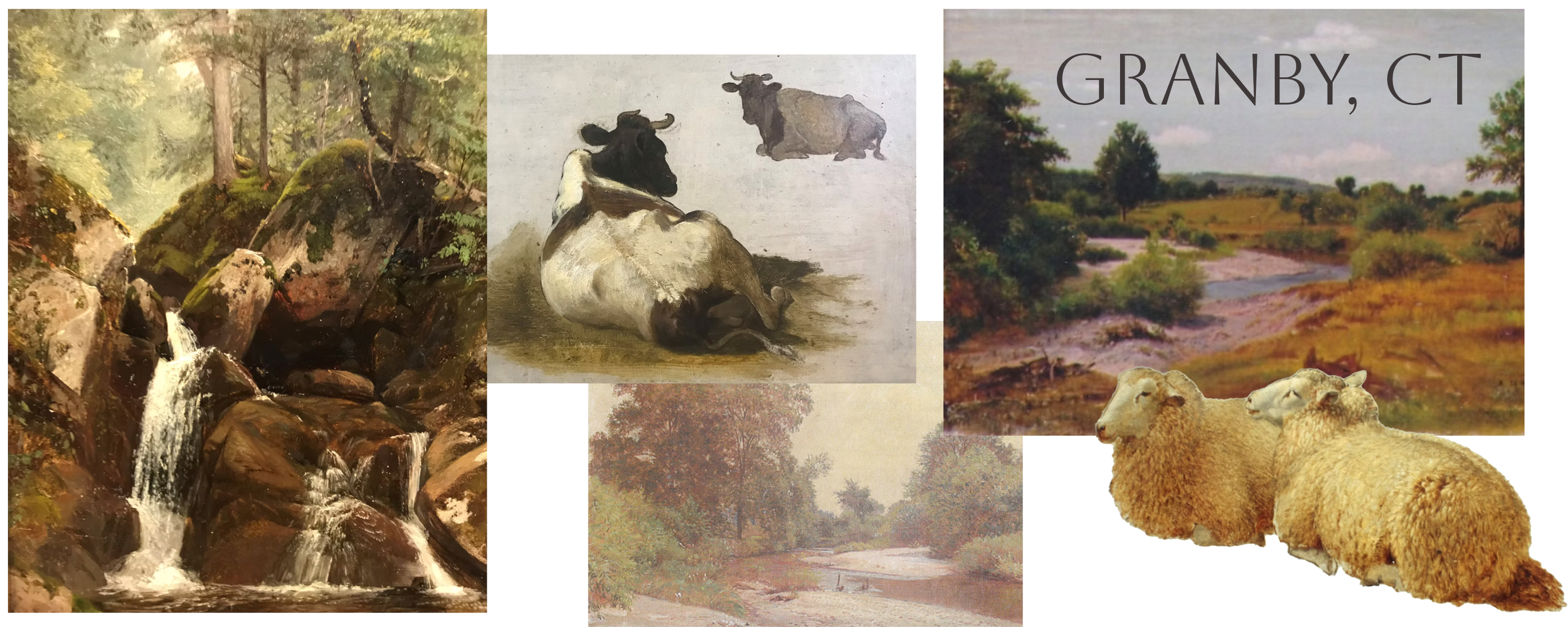
Caption clockwise: “Enders Falls” Aaron Draper Shattuck. “Cow Calving"” Aaron Draper Shattuck. “Rivers Edge, Upper Salmon Brook” Aaron Draper Shattuck. “My Old Sheep Billie” Aaron Draper Shattuck 1860. “Salmon Brook” Aaron Draper Shattuck. All images courtesy of the Salmon Brook Historical Society. **My cousins, my children, and I have spent countless hours playing in Salmon Brook. Seeing it as it was over a hundred years ago is something special indeed.**
Last month, I got take a tour of Granby’s Shattuck collection, housed by the Salmon Brook Historic Society. Whatever inspiration is in the Granby well water, we both drank it. Piece after piece features our beloved town and New England. As someone who paints a lot of rocks, seeing someone who painted the same rocks over 100 years ago feels revelatory. Our land is not particularly easy to cultivate because of them (Granby was known for rocky soil). But taken by themselves, in the right light, in majestic settings, they suddenly become the star. Trace water over them in the form of brooks and streams, and you add yet another dimension.
I’m thrilled that so much has been done to catalog his works online (view them here), and that he has not been lost to time. In 2019 he was even included in a National Gallery of Art pre-raphaelite exhibit, featuring artists influenced by renowned critic John Ruskin. And for me, that makes connection number million and one: Ruskin was mentor to another of my favorite artists, Lilias Trotter.
I hope that this little note will be a welcome introduction to an artist who has become quite special to me in a short amount of time. His brushwork is exquisite, giving just enough information to let you figure out the rest (and when called for, it can also be deliciously detailed). His subject matter holds sacred the land and animals we all love so much. And his use of color shows a boldness I will continue to channel. —JF
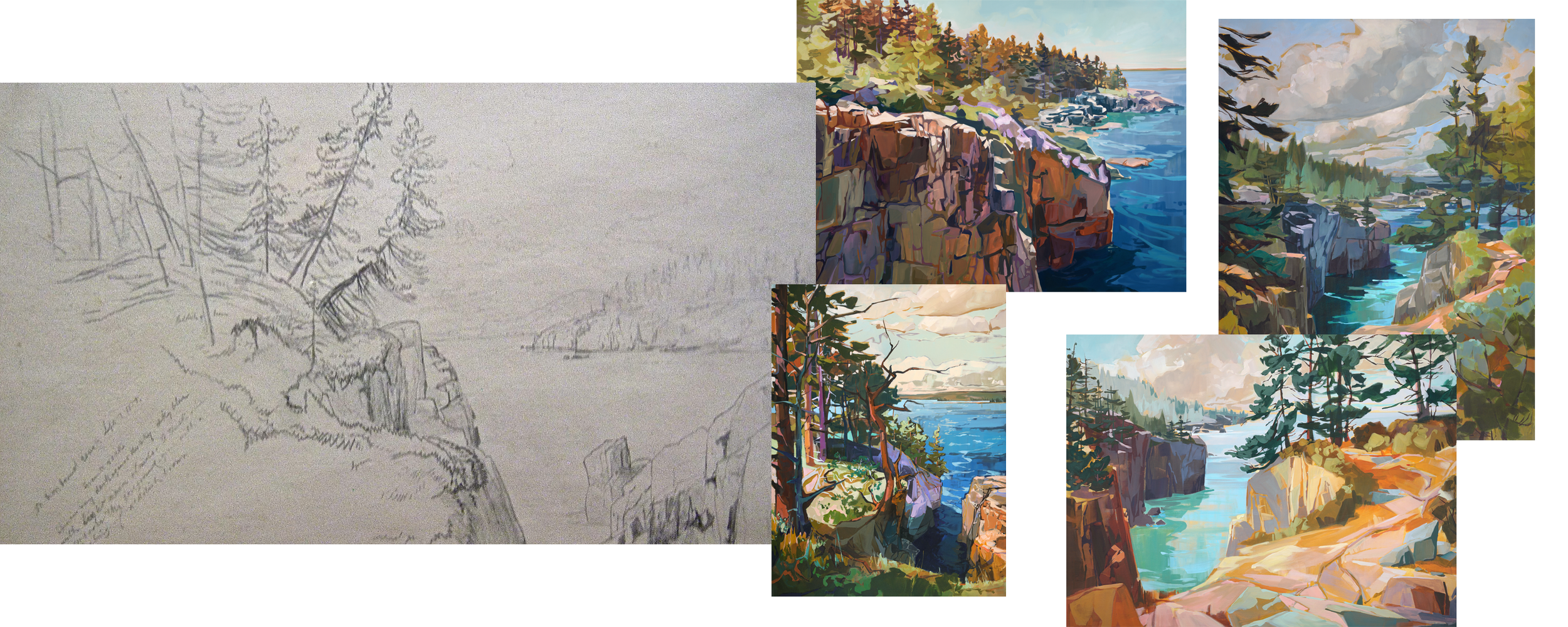
Caption clockwise: “Maine, Ironbound Coast” Aaron Draper Shattuck. Image courtesy of the Salmon Brook Historical Society. “Be Quiet,” “Lost and Found,” “Trail Mix,” and “Still Standing” all by Jess Franks.
As mentioned, I’ve painted many of the same locations and regions as Shattuck.
Explore my prints and archive tabs to see if you can find Enders Falls, Mt. Washington, and Mt. Desert, among many others.
On the Website
New Collection
Coming in November
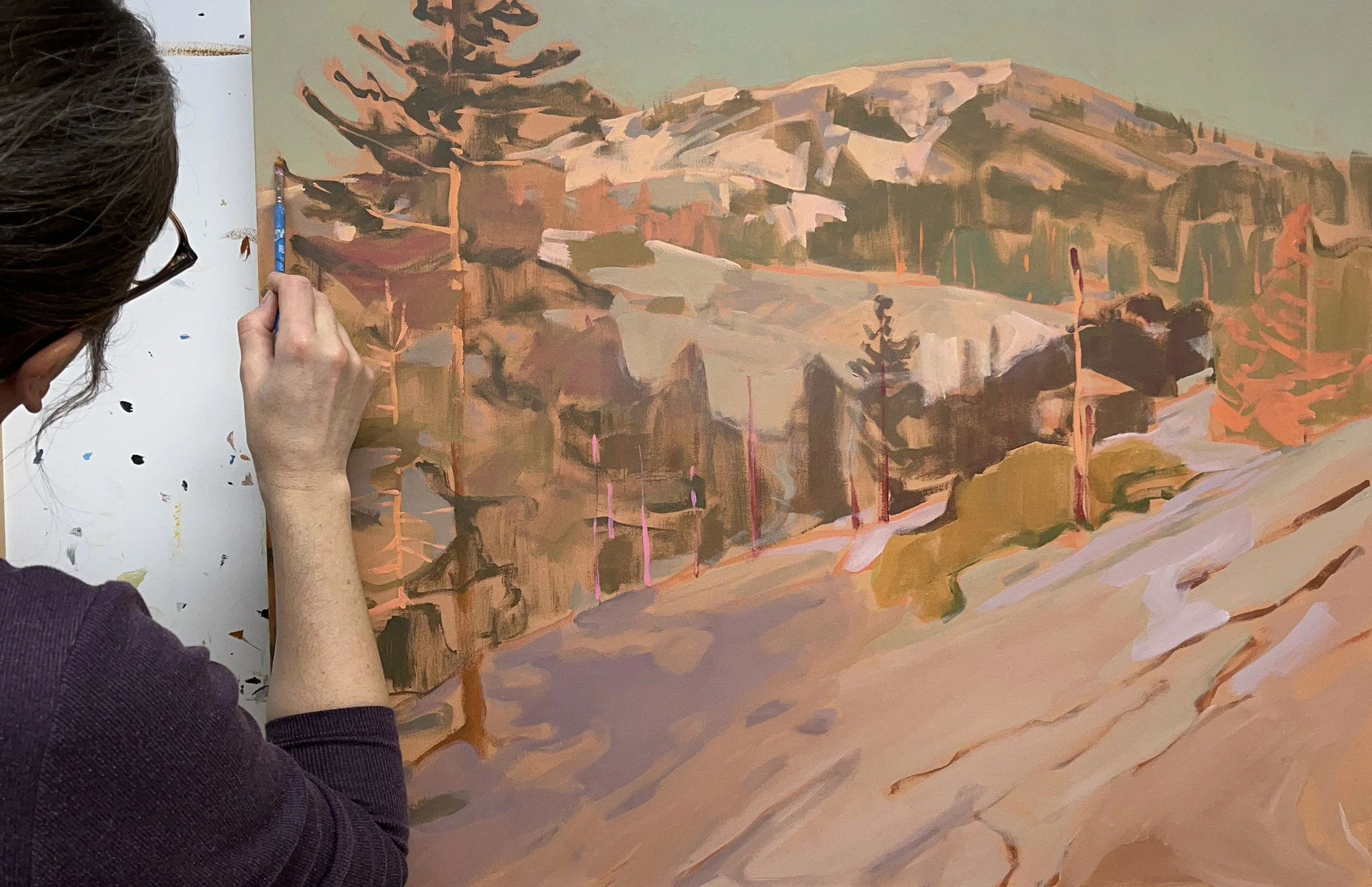
My newest collection, focused on “Ascents,” will be arriving in mid-November. It’s going to be a beautiful climb through Maine, New Hampshire, Colorado and TBD. To get a sneak “peak” of another piece, hop on over to Insta.
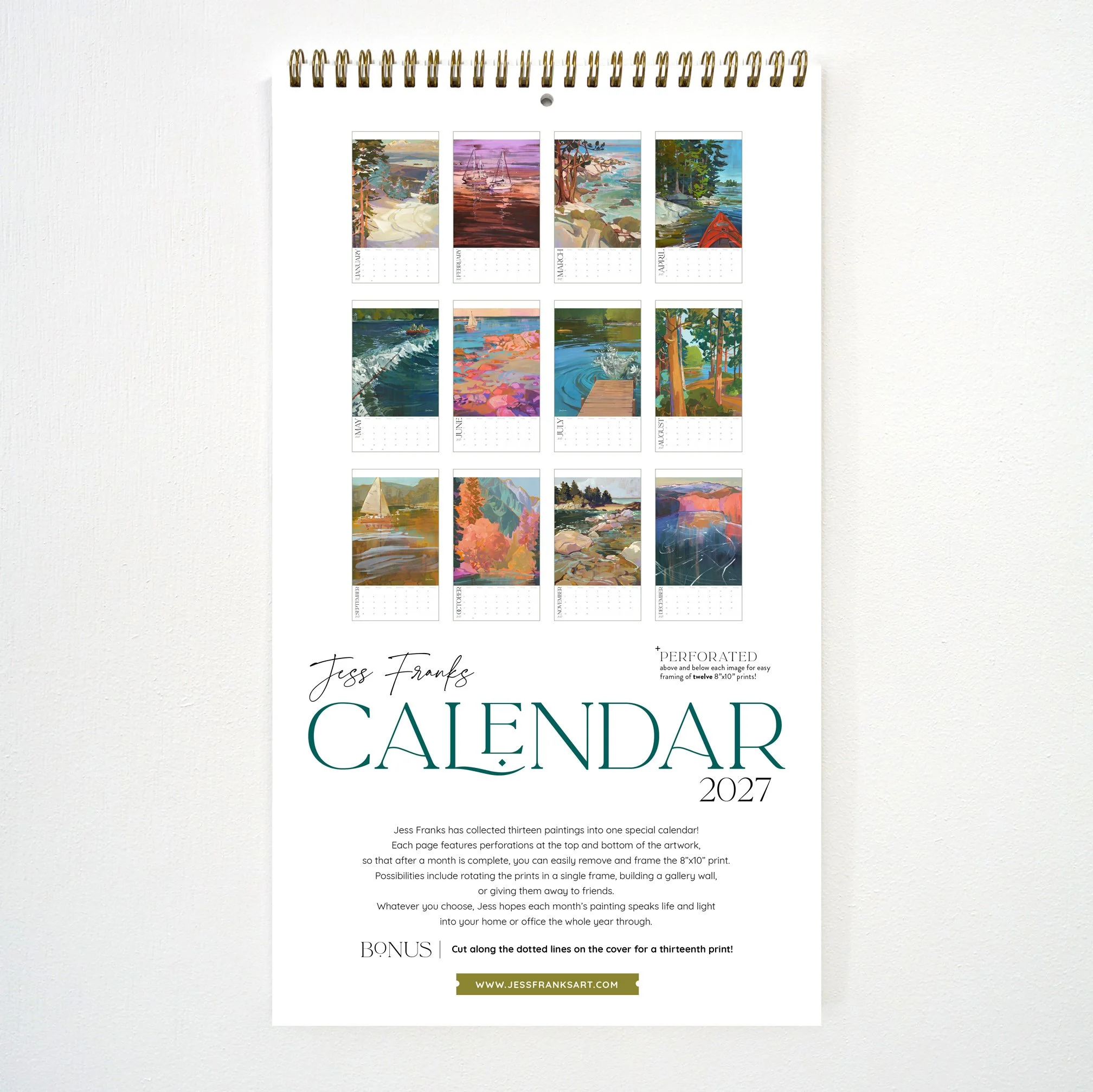
The pre-order ships out soon! The collector favorite calendar is back, and as always features 12 perforated prints for easy framing! Built from my “On the Water” series, each month will brighten up any gray corner with fun memories.