
The Artist’s Delay
I recently wrote an updated bio for my IG page (view here—it’s a fun read), and it got me thinking some more about my “artistic process.” That’s a phrase that can carry an air of pomposity if said in a certain tone while wearing trapezoid glasses and waving a paintbrush around one’s cavernous Tribeca loft. Rest assured, it’s just me in my shed still wearing last night’s pajamas and surrounded by empty coffee cups and spent tubes of paint. There is so much to the idea of “artistic process,” but in today’s note from the studio, I’m going to highlight a few aspects of mine that give a more behind-the-scenes look at how my paintings come to be.
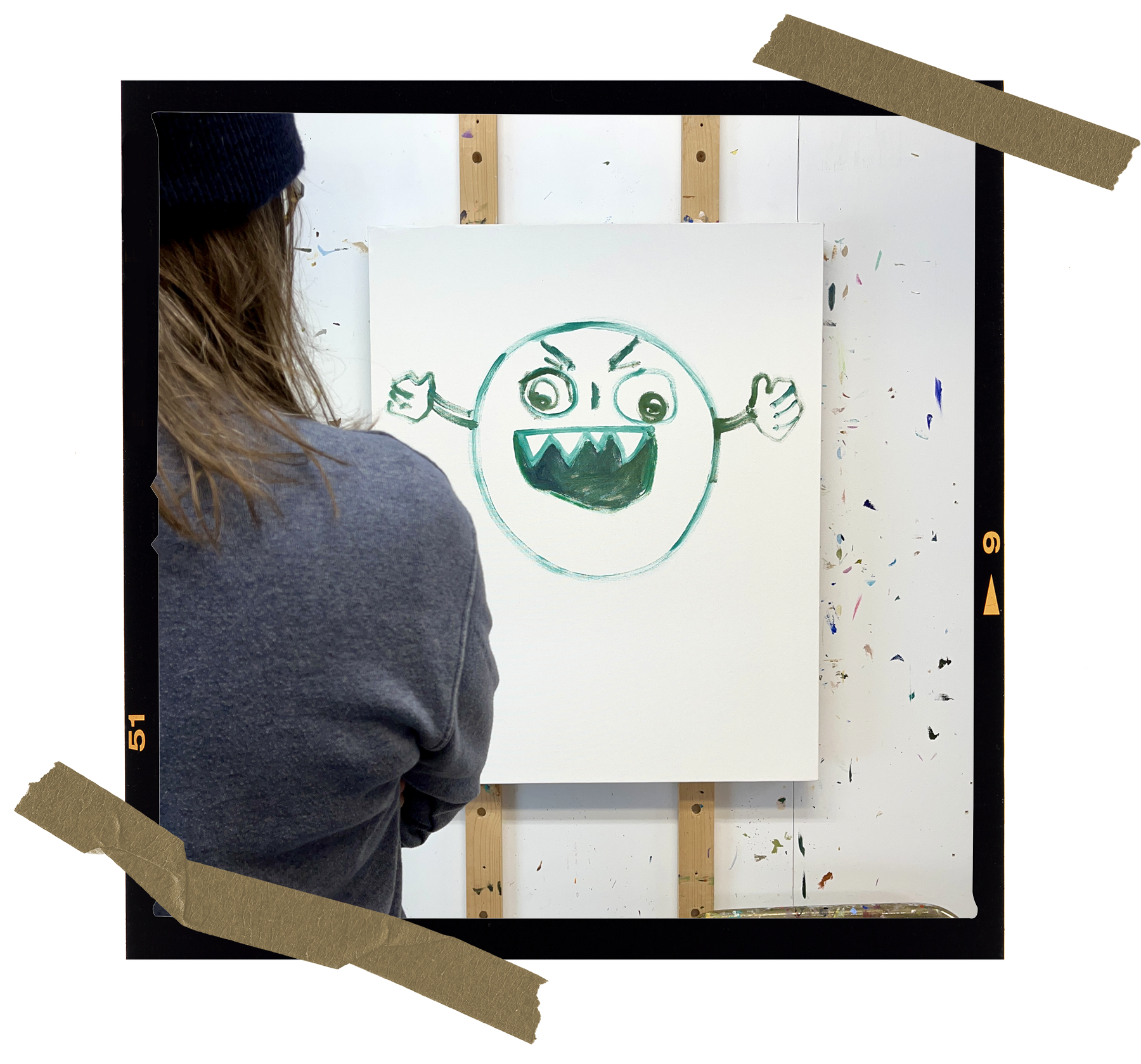
Preparations (or how I avoid that scary canvas)
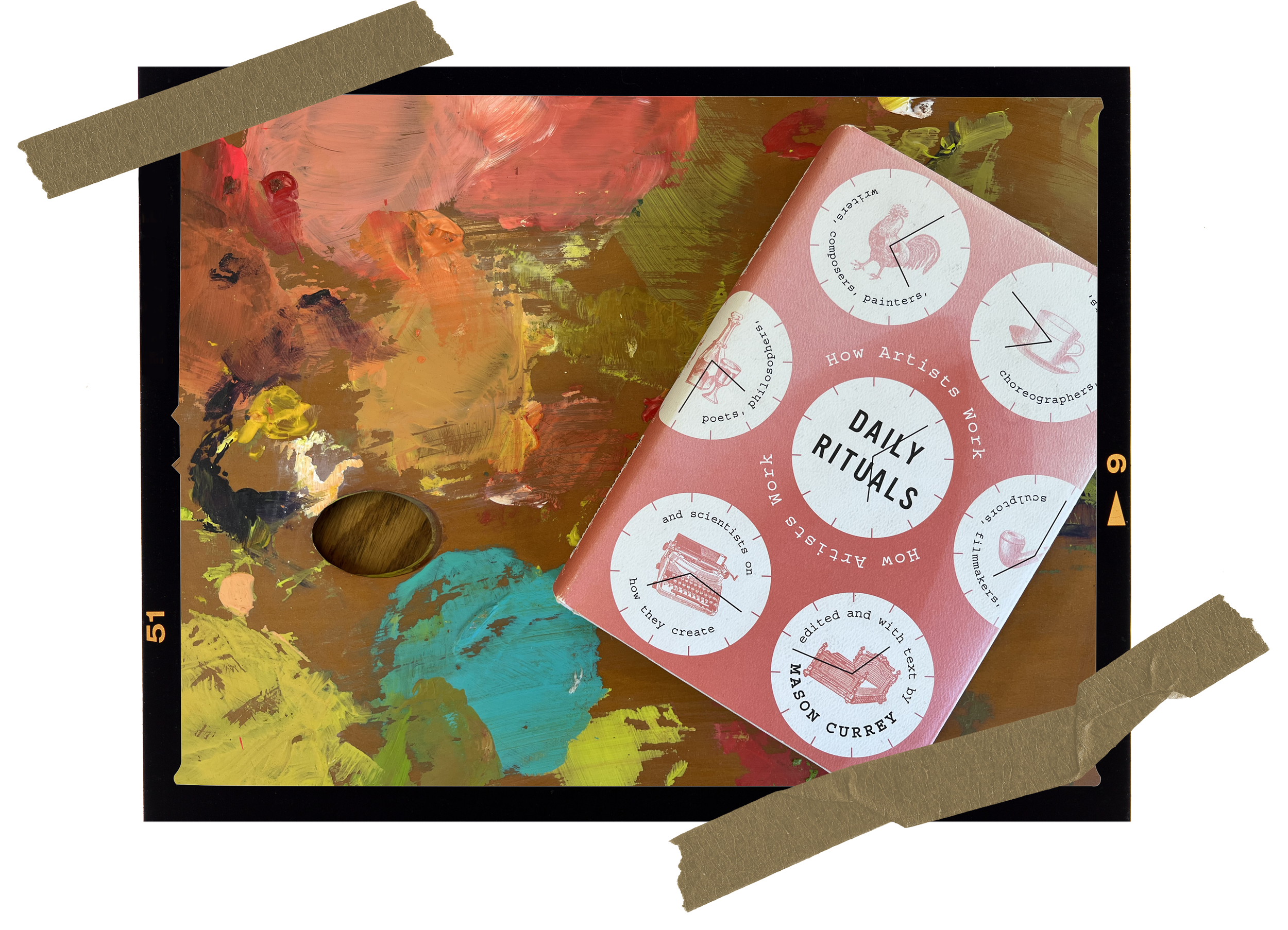
When I first started painting full-time, my own daily rhythms befuddled me a bit. Why did I waste so much time in the morning doing everything except painting? After all, didn’t I love painting? My wise, non-artistic husband bought me the book “Daily Rituals,” and I thought it was just a self-help book for stuck creatives and I didn’t even crack it open. Later, when I finally did, I discovered it was a collection of profiles about the daily schedules and habits of famous artists. I couldn’t put it down. As I read, I found myself amongst the greats, not so much in skill as in nature and neuroses. They spent a lot of hours NOT painting, not writing, not composing. Photorealist painter Chuck Close said, “The idea is to work for three hours, break for lunch, go back and work for three hours, and then, you know, break. Sometimes I could go back and work in the evening, but basically it was counterproductive. At a certain point, I’d start making enough mistakes that I would spend the next day trying to correct them.” Don’t I know it, Chuck. Author P.G. Wodehouse went on walks multiple times daily, read, watched TV, and still managed to carve out about 5 hours a day of writing. Others imposed rigorous schedules on themselves that they stuck to like duct tape, because sometimes, external parameters are the best motivator for chronic procrastinators. Still others, when inspiration hit, would shut themselves away painting all their waking hours “in a dumb fury of work,” as Van Gogh put it. The habits of these (usually tortured) greats varied widely, but all were in the pursuit of creating their next piece of art.
My takeaway: Sometimes you need to consistently show up to a canvas whether you are inspired or not. And sometimes you need to stay away from it and eat potato chips until you get inspired. Either way, you will create your best and worst work there, and both are beneficial to your artistic formation. And common to most of the great artists. So that’s consoling.
Foundations (or how I start with problems on purpose)
My brain comes alive when it’s given a problem to solve. Not so if I’m just painting the same old thing in the same old palette—autopilot is obvious on a canvas.
The soul is missing.
So knowing this, I rarely start my paintings the same way. Sometimes I’ll blast one color of paint over the whole thing before blocking in the composition. Sometimes it’s light pink, sometimes it’s rusty brown. Sometimes I’ll block in the composition directly with the opposite colors of what I think it will be by the end. Sometimes I switch up the size, the brush, the substrate. Sometimes I premix some colors, sometimes I just dab my brush into three and see what happens. All of this is to serve one goal: start with a foundation that I have to figure out how to build on. When I don’t know the answer, I’m fully engaged, fully present, fully problem-solving. And there is nothing more exciting and self-propelling than successfully solving the first clue of a multi-problem puzzle. It’s the very best escape room.
My takeaway: If this technique results in a bad painting, I just haven’t solved it yet.
Iterations (or how I parent a painting through the teen years)
What to do when things are going wrong... I don’t usually feel they are in the first few layers. The stakes are so low and I’m not trying to resolve anything, so I can slap down paint without much worry. This is usually the stage where I think I’m a genius. Kind of like when your child is well-behaved and you think you are a good parent. Inevitably, the painting and child go through puberty and you’re stuck with gawky angles and obvious blemishes in a creation that no longer listens to you. What happened to my beautiful opus? Have I destroyed it? What do I do now?
My takeaway: As with teens, first, I remember that the current stage is not forever and things often get much better. But it takes time, and attention, and a strong backbone. Courageously hold fast to that child I mean painting. Second, I examine if there is a part of the painting I’m holding too precious because I love it too much even though it’s not working with the rest of the painting. Sometimes I have to let that part go, and paint over it so that everything else makes sense. Third, I look at photos of the earlier stages to remember what I loved about it (again, SO applicable to parenting). And if I can, I try to paint back that buried part that I might have lost in all the other sauce.
___
Hope you’ve enjoyed this month’s note. I’m really enjoying writing these, and looking forward to sharing more process insights in the future!
Until then, seek the beauty or bring the beauty.
—Jess
On the Website
Oops!
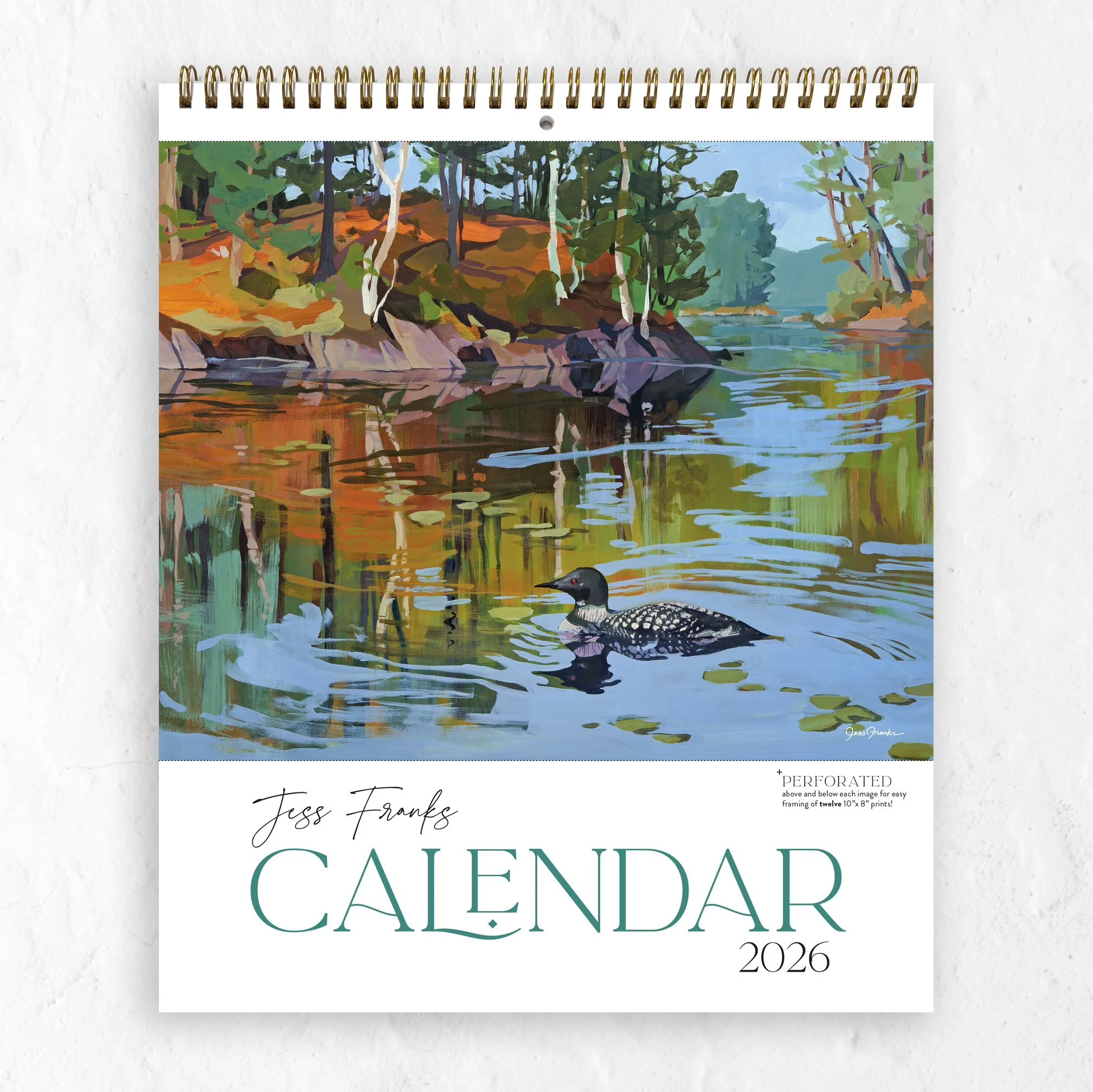
I ordered too many 2026 Calendars this year. I’m clearing them out at a substantially reduced price. Normally $38, now just $20. That’s for 13 8x10” prints. It’s the best deal on my site.
Slow Trails
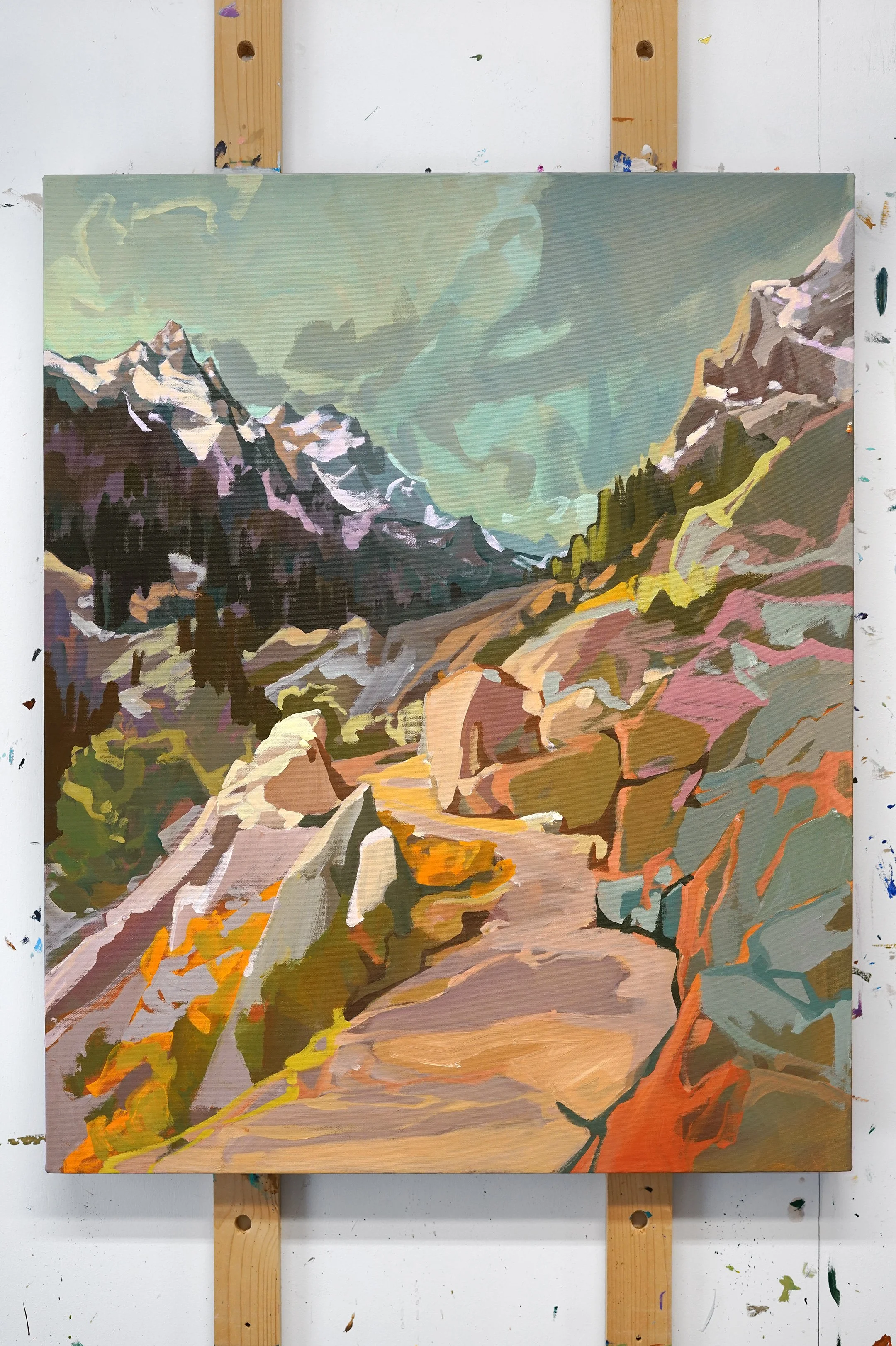
My new collection of originals is developing, and should be arriving on the website in late spring. I’m taking extra, thoughtful time to really tune in each painting and explore where the palette trail leads. I currently have seven going at once because I find that breakthroughs on one helps another. The focus on slow layering is already giving them such depth!
Around the Sphere
Sunset/Moonrise
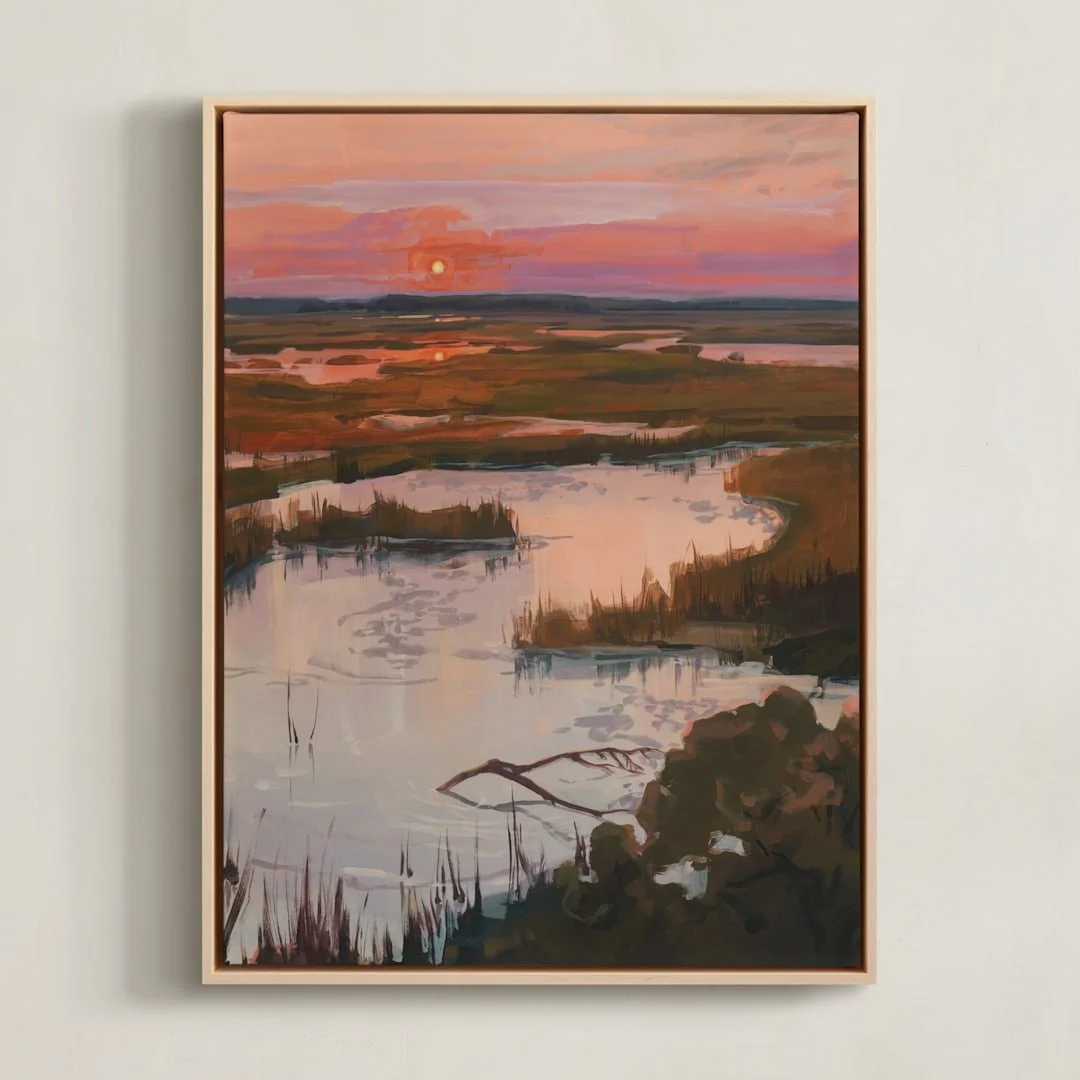
I have 4 new, award-winning prints available on Minted, including a very special pair.
Just two hours after catching the reference shot for this sunset marsh painting, my whole extended family decided to go for a moonlit beach walk, not knowing what we were about to stumble upon. There, on the opposite horizon from that glorious sunset was an equally glorious strawberry moonrise over the ocean. And when a red moon glows over a deep blue nightscape, you get glints of purple contrasted against weird greens. It’s all as delicious as a shortcake and almost too much beauty to bear. See it here >